
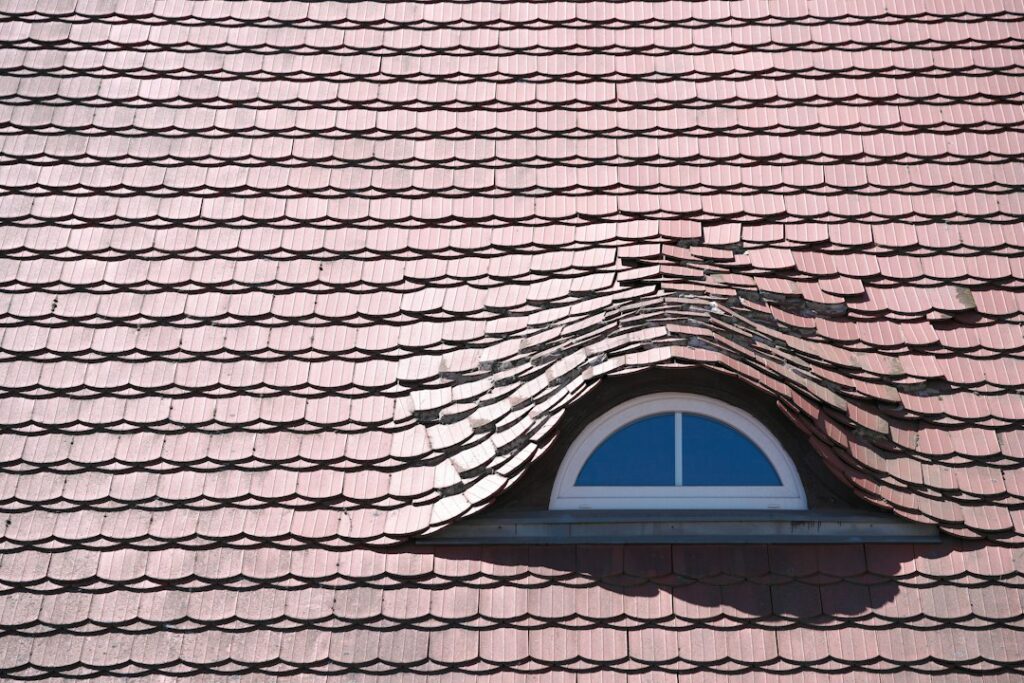
Before leaving Getzville, NY for a vacation, take a few minutes to check the roof, gutters, attic, and nearby trees. The goal is not to perform major repairs before traveling, but to identify conditions that could allow water, wind, ice, or falling branches to create problems while the house is unattended.
What should be checked before leaving for vacation?
A pre-trip roof inspection should focus on visible damage, drainage, loose materials, and anything that could worsen during rain or strong wind. A ground-level review is often enough to spot warning signs.
Walk around the home and look for:
- Shingles that are missing, lifted, curled, cracked, or lying in the yard
- Dark patches or uneven areas on the roof surface
- Sagging along the roofline, near the gutters, or around roof valleys
- Loose flashing around chimneys, skylights, vents, and wall intersections
- Gutter sections that are pulling away from the fascia
- Downspouts that are disconnected, clogged, or draining against the foundation
- Tree limbs resting on or hanging directly above the roof
- Granules collecting heavily near downspout outlets or at the ends of gutters
Do not climb onto a wet, steep, icy, or damaged roof. A roof can look stable from the ground while still containing weak areas, especially after storms, repeated freeze-thaw cycles, or long-term moisture exposure.
Why are gutters and downspouts part of roof preparation?
A roof depends on clear drainage. Gutters collect runoff, and downspouts carry that water away from the foundation. If leaves, twigs, or compacted debris block the system, water may back up beneath roof edges or overflow onto siding and basement walls.
Before a trip, clear accessible gutter debris and confirm that downspouts direct water several feet away from the home. Extensions should remain in place and should not be aimed toward walkways, window wells, or low areas beside the foundation.
In this region, late-season leaves can create a particular problem because a gutter may appear clear while debris is lodged inside a downspout. Run water through the system if practical. Slow drainage, overflow, or water spilling from seams suggests that the system needs attention before the house is left unattended.
Gutter guards reduce the amount of debris entering a gutter, but they do not eliminate maintenance. Small seeds, roof granules, pine needles, and ice can still interfere with drainage.
How should the roof be prepared for heavy rain or wind?
The most useful preparation is to correct small vulnerabilities before they meet severe weather. Loose flashing, exposed fasteners, damaged vent covers, and lifted shingles can allow wind-driven rain to enter.
Check the areas around:
- Plumbing and ventilation penetrations
- Chimneys and masonry joints
- Skylights
- Roof-to-wall connections
- Valleys where two roof slopes meet
- Lower roof edges above porches, additions, and garages
Do not cover a roof with a tarp unless there is an active emergency and the material can be secured safely. Improperly placed tarps can trap moisture, damage shingles, loosen in the wind, or create a dangerous climbing situation. Temporary protection is best handled only when conditions are safe and the covering can be installed without risking a fall.
Before traveling, also secure outdoor items that could become airborne. Patio furniture, loose planters, ladders, decorations, and lightweight equipment can damage shingles, gutters, siding, or windows during gusty weather.
What should homeowners do about snow and ice?
Vacation planning during winter requires extra attention because snow and ice can conceal roof damage and add weight to roof edges. Most residential roofs are designed for ordinary local snowfall, but problems can develop when heavy snow accumulates unevenly or when ice dams prevent drainage.
An ice dam forms when melting snow refreezes near a colder roof edge. Water behind the dam can work beneath shingles and enter ceilings or walls. Warning signs include icicles accompanied by interior staining, wet insulation, peeling paint, or water marks along exterior walls.
Avoid standing beneath large icicles and do not chop ice from the roof. Breaking ice can damage shingles and gutters, while roof access in winter is especially hazardous. If a serious ice buildup is visible before departure, it should be addressed safely rather than ignored for an extended absence.
Attic ventilation and insulation also influence ice-dam risk. Warm air escaping into the attic can heat the underside of the roof, causing uneven snow melt. Keeping attic air sealed and ventilation pathways clear is a long-term measure, not a quick pre-vacation fix.
Should trees near the house be inspected?

Yes. Tree limbs are a significant roof concern during wind, wet snow, and ice events. A branch that appears harmless in dry weather may become heavy when covered with snow or weakened by decay.
Look for:
- Dead limbs above the roof
- Branches rubbing against shingles or gutters
- Cracks near major connections
- Leaning trees
- Mushrooms or decay near the base
- Limbs touching overhead utility lines
Do not attempt to cut large, elevated, or tensioned branches from a ladder. The danger increases when branches are close to electrical lines or positioned over the roof. Tree maintenance may require specialized equipment and safe clearance practices.
Keeping branches trimmed away from the roof also helps reduce leaf buildup, moss growth, and gutter blockages.
What should be checked inside the attic?
An attic inspection can reveal a roof leak before it becomes visible in living spaces. Use a flashlight and look for damp insulation, darkened wood, water stains, mold-like growth, rusted fasteners, or daylight visible through roof boards.
Pay particular attention after recent rain or a rapid thaw. Some leaks appear only under specific wind directions or when melting snow flows across a roof surface.
The attic should not feel excessively damp. Condensation on nails, roof sheathing, or metal components may indicate inadequate ventilation or excessive indoor moisture rather than a direct roof leak. Bathroom fans should exhaust outdoors, not into the attic, and kitchen or laundry moisture should not be allowed to accumulate in the roof space.
If a leak is active, electrical wiring is wet, or structural wood appears weakened, avoid entering the affected area and treat the condition as a safety issue.
Should the home’s water supply be shut off?
Shutting off the main water supply is not a roofing requirement, but it can limit interior damage if a plumbing failure occurs while the home is empty. This is especially useful during winter travel if the house will be left at a reduced temperature.
If the water is shut off, confirm that heating equipment, fire protection systems, sump pumps, and other essential systems will continue operating as intended. Do not lower the thermostat so far that pipes may freeze. Opening cabinet doors beneath sinks can improve warm-air circulation around plumbing on especially cold days.
A roof leak may be minor compared with the damage caused by a burst pipe, so vacation preparation should consider the entire weather exposure of the property.
What should be done after returning?
Inspect the attic, ceilings, upper walls, gutters, and roof edges after returning, particularly if the area experienced strong wind, heavy rain, freezing rain, or significant snowfall. Look for new stains, damp insulation, displaced shingles, clogged gutters, and branches on the roof.
A small ceiling mark should not automatically be painted over. The visible stain may be the final sign of water that has traveled through insulation, framing, or wall cavities. Finding the entry point and confirming that the area is dry matters more than concealing the discoloration.
The safest vacation preparation is a short, deliberate inspection from the ground and from accessible interior spaces, followed by prompt attention to clear warning signs. That routine can help prevent a minor roof defect from becoming an unnoticed interior problem during an extended absence.
