
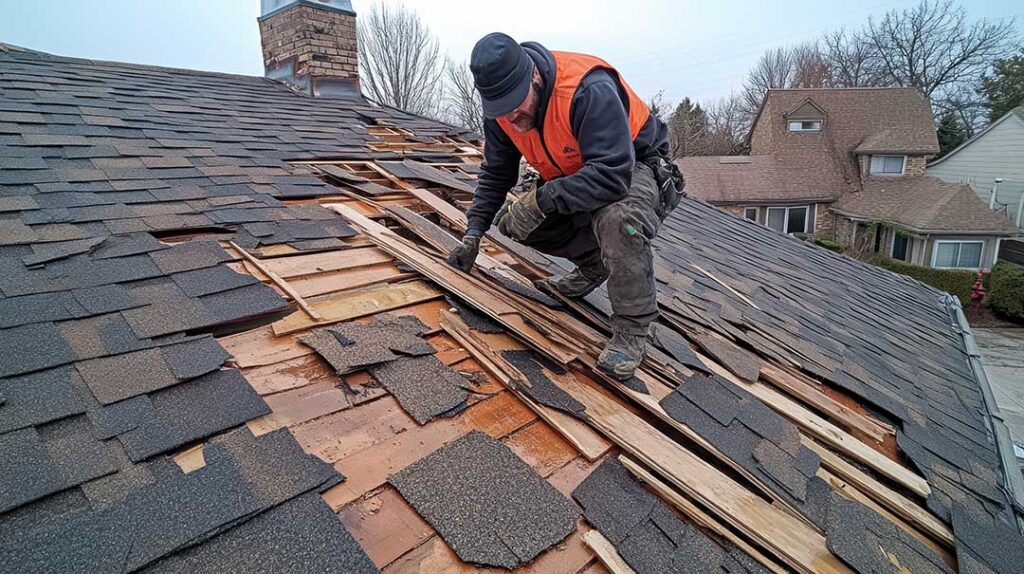
Replacing only part of a roof can be more complicated than matching a color from a sample. Shingles that look similar on a shelf may differ in size, texture, exposure, thickness, and weathering. In Getzville, NY, where roofs experience snow, wind, freeze-thaw cycles, and strong seasonal changes, a close match should also perform reliably in the existing roof system.
What is the first step in matching replacement shingles?
The first step is identifying the existing shingle as accurately as possible. Look for unused bundles, installation records, warranty papers, or labels stored in a garage, attic, or shed. Packaging may list the manufacturer, product line, color name, and shingle type.
If no records remain, examine the roof itself. Useful details include:
- Shingle type, such as three-tab, architectural, or specialty shingles
- Approximate installation date
- Color blend and dominant tones
- Shingle dimensions and tab or pattern layout
- Surface texture and shadow lines
- Exposure, meaning the visible portion of each shingle
- Thickness and stiffness
- Manufacturer markings on the underside or nail line
A roof viewed from the ground can hide important differences. If safe access is not available, photographs taken from several angles may help with identification without requiring anyone to walk on the roof.
Why is color matching harder than it appears?
Roofing colors are blended rather than perfectly uniform. A shingle labeled “gray,” for example, may include black, brown, blue, tan, or silver tones. The visible blend can change depending on sunlight, roof slope, nearby trees, and the direction from which the roof is viewed.
Existing shingles also fade and weather unevenly. South- and west-facing slopes may receive more sunlight, while shaded areas can retain darker tones or develop surface discoloration. A replacement bundle that matches a new sample may still appear noticeably brighter or darker beside shingles that have been exposed for years.
For a better comparison, place a sample next to the existing shingles rather than judging it separately. Check the match:
- In direct sunlight
- In overcast conditions
- From the street or normal viewing distance
- Against more than one roof slope
- At different times of day
A small sample can be misleading because the overall roof pattern becomes more visible as more shingles are installed.
Can a different shingle style be used for a small repair?
Usually, the replacement should match the existing style, not merely the color. Three-tab shingles, architectural shingles, and other designs have different layouts, thicknesses, fastening areas, and visual patterns.
Mixing styles on the same roof slope can create uneven lines and may affect how water sheds across the repair. Even if a different shingle appears close in color, its dimensions may not align with the existing courses.
The replacement should generally match:
- Shingle type
- Manufacturer and product family, when possible
- Length and width
- Exposure
- Thickness
- Surface profile
- Nail-line location
- Interlocking or adhesive features
A slightly different color may be less noticeable than a different shingle shape or exposure. Pattern alignment often determines whether a repair blends naturally.
How can an older shingle be identified if the original product is discontinued?
Discontinued shingles are common on older homes. Manufacturers change product lines, colors, and dimensions over time, so an exact match may no longer be available.
Start by comparing the original shingle with current products that share the same construction and dimensions. A roofing material reference, old invoice, or remaining bundle label may narrow the search. Photographs of intact shingles can also help, especially when they show the full pattern rather than a close-up of the surface.
If an exact match cannot be found, the least noticeable repair location may matter as much as the color. A small replacement on a front-facing slope will usually be more visible than the same repair on a rear or less prominent slope. This does not make appearance irrelevant, but it helps set realistic expectations.
For widespread damage, patching with a visibly different product may create a checkerboard effect. In that situation, replacing an entire roof slope can sometimes produce a more consistent appearance than adding many isolated patches, although the appropriate approach depends on the roof’s age, condition, and remaining service life.
Does roof age affect the match?
Yes. Age changes both appearance and flexibility. Older shingles may have faded, lost granules, curled slightly, or become brittle. New shingles typically have sharper edges, stronger color variation, and a more pronounced surface texture.
A new shingle may also be difficult to insert without damaging adjacent material if the existing shingles have become stiff. Cold weather increases brittleness, which matters in the winter and during early spring. In the local climate, repairs are often easier during moderate temperatures when adhesive strips and shingle surfaces can function as intended.
A visual match does not guarantee a functional match. If surrounding shingles are near the end of their useful life, a small repair may address the immediate damaged area without restoring the roof’s broader weather resistance.
What should be checked besides the shingle color?
The shingles are only one part of the roof assembly. A replacement should be compatible with the surrounding materials and the reason the original shingles failed.
Inspect the repair area for:
- Damaged or softened roof decking
- Worn underlayment
- Exposed or deteriorated flashing
- Loose or corroded fasteners
- Blocked drainage paths
- Missing ridge, hip, or starter materials
- Ice-related damage near eaves and roof transitions
- Granule accumulation in gutters or at downspouts
In snowy regions, localized damage may be related to ice buildup, wind uplift, falling branches, or repeated freeze-thaw movement. Replacing a shingle without correcting the underlying issue can leave the same area vulnerable to future leakage.
Flashing around chimneys, wall intersections, vents, and skylights deserves particular attention. A shingle can be perfectly matched and still fail to keep water out if the flashing beneath it is damaged or improperly positioned.
Is it acceptable for replacement shingles to look slightly different?
A slight difference is often unavoidable, particularly on an aged roof. The goal is usually a reasonable visual and functional blend rather than a guarantee that the repair will be invisible.
Differences are more noticeable when:
- The roof has a simple, uniform color
- The repair is large
- The area is near the front entry or another prominent viewpoint
- The existing shingles are heavily faded
- The replacement has a different profile or exposure
- The roof slope faces strong sunlight
For a small repair, blending may improve after weather exposure, but new shingles should not be artificially aged with paint, stains, solvents, or abrasive methods. Those treatments can damage the protective surface and interfere with water resistance.
When does matching become a safety issue?
Roof access can be hazardous, especially when surfaces are wet, icy, steep, or covered with loose granules. Snow and freeze-thaw conditions can make a seemingly simple inspection unsafe. A damaged roof may also contain weak decking or concealed openings.
Professional assessment is appropriate when the work involves steep slopes, structural damage, electrical equipment, significant leakage, or materials that cannot be safely reached from the ground. Local building requirements may also apply when repairs are extensive or involve structural components.
The most reliable match combines accurate product identification, realistic expectations about weathering, and inspection of the surrounding roof system. Color matters, but dimensions, installation pattern, roof age, flashing, and winter-related exposure often determine whether a repair remains sound after the new shingles are in place.
